Geneva, Switzerland -- a world capital of precision dentistry and cosmetic excellence
Hollywood Smile in Geneva: Complete Guide & Costs 2026
A Hollywood Smile is the gold standard of cosmetic dentistry -- a full set of porcelain veneers designed to give you the flawless, ultra-white, perfectly uniform smile you see on film stars and influencers. In Geneva, where Swiss precision meets world-class dental expertise, you have access to some of the finest cosmetic dentists in Europe.
This guide covers everything you need to know before committing to a Hollywood Smile in Geneva: the exact procedure, materials, realistic costs in Swiss Francs, how long results last, who qualifies, what risks to consider, and how to choose the right dentist. Whether you are comparing Geneva to dental tourism in Turkey, or just starting your research, this is the definitive resource.
What Is a Hollywood Smile?
A Hollywood Smile refers to a complete smile makeover using porcelain veneers -- thin shells of ceramic bonded to the front surfaces of your teeth to create a perfectly aligned, bright white, symmetrical smile. The name comes from the dazzling smiles of Hollywood actors, which became synonymous with cosmetic dental perfection from the 1930s onward.
Unlike a single veneer to fix one chipped tooth, a Hollywood Smile is a comprehensive treatment covering 10 to 20 teeth -- typically the upper and lower teeth visible when you smile (canine to canine at minimum, premolar to premolar for a full makeover). The goal is not just whiteness but total harmony: consistent shape, size, symmetry, and colour across all visible teeth.
The process is both art and science. A skilled cosmetic dentist works with a master ceramist -- the technician who handcrafts each veneer in a dental laboratory -- to design a smile that fits your facial proportions, skin tone, lip line, and personal preferences. In Geneva, our clinic employs on-site ceramists, allowing real-time adjustments that remote laboratories cannot match.
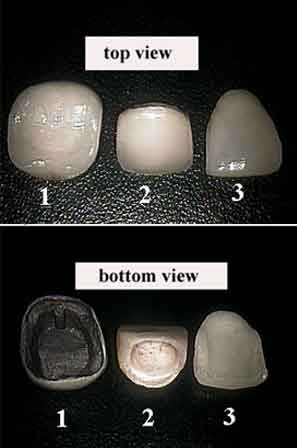
Key characteristics of a Hollywood Smile include:
- Ultra-white shade -- typically BL1 to BL3 (bleach shades), significantly brighter than natural teeth
- Perfect symmetry -- the midline of your teeth aligns with the centre of your face
- Uniform shape and size -- each tooth follows an ideal proportion (width-to-length ratio of approximately 75-80%)
- Smooth, even gum line -- sometimes requiring gum contouring (gingivectomy) before veneer placement
- No gaps, chips, or discolouration -- every imperfection is masked
The Hollywood Smile Procedure: Step by Step
A proper Hollywood Smile in Geneva takes 3 to 4 weeks from first consultation to final bonding. Any clinic promising to complete the entire process in under a week is cutting corners. Here is exactly what happens at each stage:
1. Initial Consultation and Assessment (Day 1)
Your dentist examines your oral health, takes X-rays and photographs, and discusses your goals. Critical checks include: gum health (periodontal assessment), bite alignment (occlusion), existing restorations, and whether you grind your teeth (bruxism). If any issues are found -- cavities, gum disease, root infections -- these must be treated before veneers can proceed.
2. Digital Smile Design (DSD) (Day 1-3)
Using intraoral scanning and specialised software, the dentist creates a digital mockup of your new smile. The DSD process maps your facial proportions -- interpupillary line, lip curvature, smile arc, gingival line -- and generates a 3D preview. You see exactly what your teeth will look like before any preparation begins. This is your opportunity to request changes: slightly longer canines, a warmer shade, more rounded edges.
3. Wax-Up and Trial Smile (Day 3-7)
The ceramist creates a physical wax model of your new teeth. A temporary composite "mock-up" is placed over your existing teeth so you can test-drive your new smile for a few days. You eat, speak, and smile with these temporaries to ensure comfort and aesthetics. This step is unique to premium clinics -- budget clinics skip it entirely.
4. Tooth Preparation (Day 7-10)
Under local anaesthesia, the dentist removes 0.3 to 0.7mm of enamel from the front surface of each tooth. This creates space for the veneers to sit flush with your natural tooth line. The amount removed depends on the material chosen and the degree of colour change needed. After preparation, temporary veneers are placed to protect the teeth while the permanent ones are being crafted.
5. Laboratory Fabrication (Day 10-21)
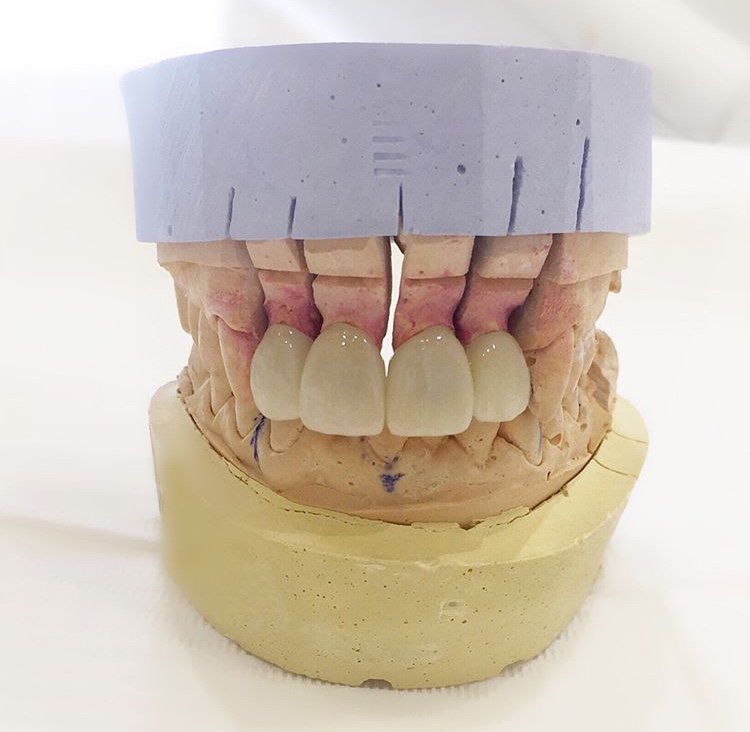
The master ceramist handcrafts each veneer layer by layer. For feldspathic veneers, this means building up individual layers of ceramic powder, firing them in a kiln, and polishing to achieve natural translucency. E-Max veneers are pressed from a single ingot and then characterised with surface stains and glazes. This is the most time-intensive stage and where the quality of the final result is determined.
6. Try-In and Final Bonding (Day 21-28)
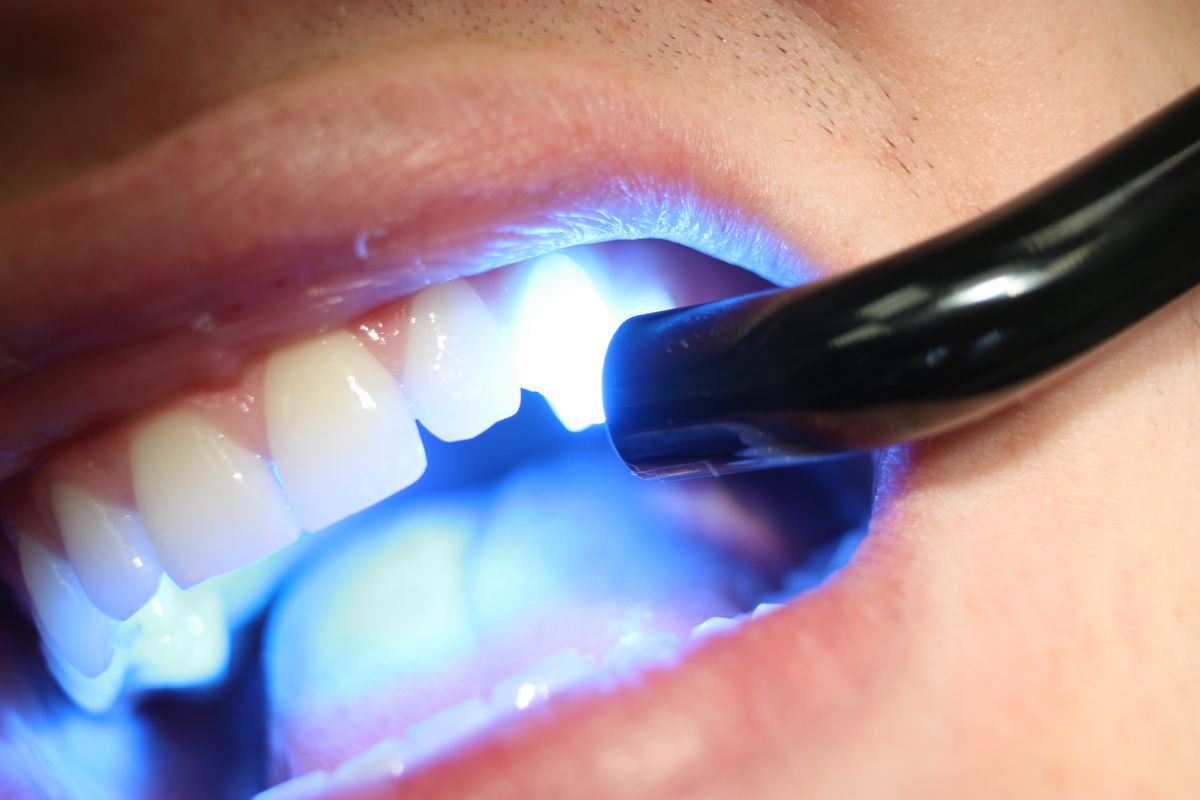
The veneers are tried in your mouth with water-soluble try-in paste to check colour, fit, and alignment. Last-minute adjustments are made. Once approved, the veneers are permanently bonded using a light-cured resin cement. The dentist removes excess cement, checks your bite, and polishes the margins. The entire bonding appointment takes 2-4 hours for a full set.
Veneer Materials Compared: Porcelain, E-Max, Feldspathic, Zirconia
Not all veneers are equal. The material determines aesthetics, durability, and price. Here is a detailed comparison of the four main options available in Geneva:
| Material | Aesthetics | Strength (MPa) | Thickness | Lifespan | Cost/Tooth (CHF) |
|---|---|---|---|---|---|
| Composite | Good | 150-250 | 0.3-0.5mm | 5-7 years | 400-800 |
| E-Max (Lithium Disilicate) | Excellent | 400-530 | 0.3-0.6mm | 15-20 years | 1,200-1,800 |
| Feldspathic Porcelain | Superior | 60-70 | 0.3-0.5mm | 10-15 years | 1,500-2,500 |
| Zirconia | Good-Very Good | 900-1,200 | 0.5-0.7mm | 15-20+ years | 1,400-2,200 |
E-Max (by Ivoclar Vivadent, a Swiss company) is the most popular choice for Hollywood Smiles because it offers the best balance of aesthetics and strength. Its lithium disilicate glass ceramic transmits light similarly to natural enamel, creating a lifelike translucency that composite and zirconia cannot match.
Feldspathic porcelain is the most aesthetic option -- the "haute couture" of veneers. Each layer is hand-built by a ceramist, allowing unmatched control over colour gradients, translucency, and surface texture. However, feldspathic veneers are more fragile and require a highly skilled ceramist, making them the most expensive option.
Zirconia is the strongest material, ideal for patients who grind their teeth or need extensive reconstruction. However, older zirconia was opaque and artificial-looking. Modern "high-translucency" zirconia (like BruxZir Anterior) has improved significantly but still does not match E-Max or feldspathic for front teeth aesthetics.
Composite veneers are the budget option. They can be applied directly in a single appointment without laboratory fabrication, but they stain more easily, chip more often, and need replacing every 5-7 years. For a temporary solution or patients under 25 (whose teeth are still settling), composite can be a reasonable starting point.
Hollywood Smile vs Natural Smile: Which Is Right for You?
Not everyone wants a blindingly white, perfectly uniform smile. Many patients prefer a "natural enhanced" look -- correcting imperfections while keeping slight variations that make a smile look real. Here is how the two approaches compare:
| Aspect | Hollywood Smile | Natural Enhanced Smile |
|---|---|---|
| Shade | BL1-BL3 (ultra-white bleach) | A1-B1 (bright but natural) |
| Uniformity | Perfectly identical teeth | Subtle size/shade variations |
| Teeth covered | 10-20 teeth | 4-8 teeth (problem areas only) |
| Cost (full set) | CHF 12,000-30,000 | CHF 5,000-12,000 |
| Best for | Public figures, performers, those wanting maximum impact | Professionals wanting improvement without obvious dental work |
| Enamel removal | More (0.5-0.7mm, all teeth) | Less (0.3-0.5mm, fewer teeth) |
A skilled cosmetic dentist in Geneva will help you find the right balance. The Digital Smile Design preview (step 2 of the procedure) lets you compare different shades and shapes before committing. Many patients arrive wanting a full Hollywood look but choose a slightly warmer shade after seeing the mockup on their face.
Important: The ultra-white Hollywood look can appear unnatural on darker skin tones or in contexts where people are not accustomed to seeing it. In Switzerland and Europe generally, the natural enhanced approach is more popular than the extreme Hollywood shade favoured in the Middle East and parts of the US.
Hollywood Smile Costs in Geneva (CHF) -- 2026 Prices
Geneva is one of the most expensive cities in the world for dental care, but you get world-class quality, strict Swiss regulations, and direct access to top ceramists. Here is what you should expect to pay:
| Treatment | Price Range (CHF) | Notes |
|---|---|---|
| Single porcelain veneer | 1,200-2,500 | Depends on material |
| 8-tooth Hollywood Smile (upper) | 9,600-20,000 | Most common package |
| Full Hollywood (16-20 teeth) | 19,200-50,000 | Upper + lower, premium materials |
| Composite veneers (per tooth) | 400-800 | Done in 1 visit, shorter lifespan |
| Digital Smile Design | 500-1,500 | Often included in package |
| Gum contouring (if needed) | 800-2,000 | Laser gingivectomy |
| Teeth whitening (pre-treatment) | 300-600 | For unveneered teeth to match shade |
Geneva vs Turkey: The Price Comparison Everyone Asks About
Dental tourism to Turkey has exploded, with clinics offering a full set of 20 veneers for EUR 3,000-6,000 (CHF 2,800-5,600) including flights and hotel. That is 70-85% cheaper than Geneva. But the price difference comes from somewhere:
- Rushed timeline: Turkish "dental holiday" packages compress 3-4 weeks of work into 5-7 days. This means less time for design, fabrication, and adjustments
- Aggressive preparation: To speed things up, some clinics prepare teeth for full crowns rather than veneers, removing far more enamel than necessary
- No follow-up: If a veneer chips, debonds, or causes bite problems 3 months later, you need to fly back to Istanbul. In Geneva, your dentist is 20 minutes away
- Laboratory quality: Geneva clinics often use in-house or Swiss/German labs. Turkish packages typically use factory-style labs with less individual attention per case
- Regulations: Swiss dental regulations (SSO) set strict standards for materials, sterilisation, and training. Turkey has fewer enforceable standards for cosmetic work
Bottom line: If budget is your primary constraint, Turkey can deliver acceptable results. If longevity, precision, and easy follow-up matter to you -- and you can afford it -- Geneva is the safer choice. Many Geneva dentists report seeing patients who need remedial work after dental tourism.
How Long Does a Hollywood Smile Last? Maintenance Guide
The lifespan of your Hollywood Smile depends on three factors: material quality, the skill of the dentist/ceramist, and your maintenance habits. Here are realistic expectations:
- E-Max veneers: 15-20 years (studies show 95.6% survival rate at 10 years)
- Feldspathic veneers: 10-15 years (more fragile but repairable)
- Zirconia: 15-20+ years (virtually indestructible but harder to repair)
- Composite: 5-7 years (staining and wear are the main issues)
Essential Maintenance Rules
- Brush twice daily with a non-abrasive fluoride toothpaste. Avoid whitening toothpastes -- they can scratch the glaze on porcelain over time
- Floss daily -- especially around the margins where the veneer meets your natural tooth. This is where bacteria accumulate and decay can start underneath the veneer
- Wear a night guard if you grind your teeth (bruxism). Even zirconia veneers can crack under the force of nighttime grinding (up to 600 newtons of force)
- Avoid biting hard objects: ice, pen caps, fingernails, pistachio shells. Porcelain is strong in compression but brittle under impact
- Limit staining substances: coffee, red wine, turmeric, and soy sauce can stain the cement line (the junction between veneer and tooth), even if the porcelain itself does not stain
- Professional cleaning every 6 months -- your hygienist should use low-abrasion polishing paste, not ultrasonic scalers directly on the veneer surface
- Annual check-up with your cosmetic dentist to inspect margins, check for micro-cracks, and assess gum health around the veneers
Are You a Good Candidate for a Hollywood Smile?
A Hollywood Smile is not suitable for everyone. The best candidates meet these criteria:
- Healthy gums and teeth -- no active cavities, no untreated gum disease
- Sufficient enamel -- you need enough natural enamel for the veneer to bond to. Heavily restored teeth (large fillings) may need crowns instead
- Realistic expectations -- veneers improve your smile dramatically but they are not indestructible and require maintenance
- Age 18+ -- teeth must be fully developed. For patients under 25, composite veneers are often recommended as a temporary solution
- Non-smokers or willing to quit -- smoking stains the cement line and increases gum recession risk around veneers
- Commitment to maintenance -- if you do not brush, floss, and attend check-ups, your investment will deteriorate faster
Ideal scenarios for a Hollywood Smile: worn-down teeth from grinding, permanent discolouration (tetracycline staining, fluorosis), multiple gaps or misaligned teeth (when orthodontics would take years), chipped or uneven teeth, or simply wanting the most transformative cosmetic result possible.
Contraindications and Risks: What Your Dentist Should Tell You
Any honest cosmetic dentist will discuss these risks and contraindications before you commit. If a clinic downplays these or skips this conversation, consider it a red flag.
Absolute Contraindications (Do Not Proceed)
- Active periodontitis -- gum disease must be treated and stabilised first. Placing veneers on receding, inflamed gums leads to failure
- Severe bruxism (untreated) -- if you grind your teeth heavily at night, porcelain veneers will crack. Bruxism must be managed with a night guard before and after veneer placement
- Insufficient enamel -- teeth that have been heavily filed down or have large existing restorations may not have enough enamel surface for veneers to bond reliably
- Severe malocclusion -- significant bite problems (deep overbite, crossbite) should be corrected with orthodontics first
Key Risks
- Irreversibility: Traditional veneers require permanent enamel removal. Once done, you will always need some form of restoration on those teeth. This is a lifelong commitment
- Sensitivity: Some patients experience increased sensitivity to hot and cold after preparation. This usually resolves within 2-4 weeks but can persist in rare cases
- Debonding: Veneers can detach from teeth, especially if bonding protocol was not followed precisely (contamination with moisture, incorrect etching time). Rebonding is straightforward but inconvenient
- Chipping or fracture: Porcelain is strong but brittle. Biting into very hard foods or trauma (sports, falls) can chip or crack a veneer. Individual veneers can usually be replaced without redoing the entire set
- Colour mismatch over time: Your natural teeth may darken with age while veneers maintain their shade. This is especially noticeable if only some teeth are veneered
- Gum recession: Over 10-15 years, gums naturally recede slightly, potentially exposing the margin where the veneer meets the tooth. This appears as a thin dark line at the gum line
How to Choose a Cosmetic Dentist in Geneva
Geneva has dozens of dental clinics, but not all are equally qualified for a Hollywood Smile. Here is what to look for -- and what to avoid:
Must-Have Qualifications
- SSO membership -- the Swiss Dental Association (Societe Suisse d'Odonto-stomatologie) sets ethical and clinical standards
- Specific cosmetic training -- ask about continuing education in cosmetic/aesthetic dentistry (AACD, BACD, or European courses)
- Before/after portfolio -- ask to see at least 20 cases of completed veneer work. Photos should be consistent quality, showing the same patients before and after, not stock images
- Digital Smile Design capability -- any serious cosmetic practice should offer DSD or similar digital preview technology
- Named ceramist -- ask who makes the veneers. A premium clinic will tell you the ceramist's name and ideally let you meet them. If the clinic cannot tell you who fabricates their veneers, the work is likely outsourced to a generic lab
Red Flags to Avoid
- Promising results in under 7 days
- No trial smile or mockup step
- Pushing for full crowns when veneers would suffice (more aggressive, more profit)
- Unwillingness to discuss risks and alternatives
- No written treatment plan with itemised costs
- Pressure to decide immediately or "special offer expires today"
Alternatives to a Hollywood Smile
A full set of porcelain veneers is not the only path to a better smile. Depending on your specific issues, one of these alternatives might be more appropriate -- or more cost-effective:
Lumineers (No-Prep Veneers)
Lumineers are a brand of ultra-thin porcelain veneers (0.2-0.3mm) that require little to no enamel removal. Advantages: potentially reversible, less invasive, no anaesthesia needed. Disadvantages: can look bulky or artificial on some patients (adding thickness without removing enamel), limited colour masking ability, smaller shade range. Cost in Geneva: CHF 1,000-1,800 per tooth.
Composite Bonding
Direct application of tooth-coloured resin to reshape and brighten teeth. Done in a single appointment per tooth. Best for: minor chips, small gaps, mild discolouration. Not ideal for: full smile transformations (composite stains and wears faster). Cost in Geneva: CHF 300-600 per tooth.
Professional Teeth Whitening
If your teeth are well-aligned but discoloured, professional whitening (in-office Zoom or take-home trays) can achieve dramatic brightening. Results: 3-8 shades lighter. Duration: 1-3 years before touch-up needed. Cost in Geneva: CHF 300-600.
Orthodontics + Whitening
For misaligned teeth, clear aligners (Invisalign, CHF 4,000-8,000) followed by professional whitening can achieve an excellent result without any enamel removal. This is the most conservative approach and ideal for younger patients. Timeline: 6-18 months for aligners, plus 2 weeks for whitening.
Dental Crowns
For severely damaged, root-canal-treated, or heavily filled teeth, full crowns (E-Max or zirconia) may be more appropriate than veneers. Crowns cover the entire tooth rather than just the front surface. Cost in Geneva: CHF 1,500-2,500 per crown.
Celebrity Hollywood Smiles: Who Has Them?
The Hollywood Smile concept originated in the 1920s when dentist Charles Pincus created temporary veneers for actors during filming. Today, countless celebrities have permanent veneers or complete smile makeovers:
- George Clooney -- had veneers early in his career to correct grinding damage
- Cristiano Ronaldo -- transformed from gap-toothed teenager to perfected smile with full veneers
- Zac Efron -- visible before/after showing significant gap closure and shape correction
- Hilary Duff -- got veneers after chipping a tooth on a microphone
- Ben Affleck -- one of the most frequently cited celebrity veneer transformations
- Morgan Freeman -- got veneers in his 60s, proving it is never too late
- Cardi B -- publicly shared her $12,500 veneer makeover, replacing a damaged set
The trend has spread far beyond Hollywood. In the Middle East, a full Hollywood Smile is a standard cosmetic procedure, as common as hair transplants. In Geneva, the treatment attracts international clients -- diplomats, executives, and high-net-worth individuals -- who value Swiss discretion and quality.
Swiss Quality Standards vs Dental Tourism
Switzerland consistently ranks among the top countries in the world for healthcare quality. Here is what sets Swiss dental care apart:
Swiss Regulatory Framework
- SSO (Swiss Dental Association) -- mandatory ethical code, continuing education requirements, and complaint resolution process
- Swissmedic -- regulates all dental materials and devices sold in Switzerland. Every material used in your mouth must be Swissmedic-approved
- Cantonal health authority (Geneva) -- inspects dental practices, enforces hygiene standards, and licenses practitioners
- Dental laboratory certification -- Swiss dental labs follow strict manufacturing standards (ISO 13485 for medical devices)
What Swiss Quality Means in Practice
- Treatment timeline: 3-4 weeks minimum, never rushed
- Material traceability: you receive documentation on exactly which ceramic brand and shade was used
- Warranty: most Swiss clinics offer a 2-5 year warranty on veneer work
- Follow-up: your dentist is local, available for adjustments, and legally liable under Swiss consumer protection law
- Sterilisation: Swiss standards exceed EU minimums, with autoclaved instruments and single-use materials as standard
The hidden cost of dental tourism: Studies published in the British Dental Journal and Journal of Prosthetic Dentistry report that 20-40% of dental tourism patients require remedial treatment within 2-5 years. When you factor in return flights, hotel stays, time off work, and remedial costs, the savings often shrink dramatically.
Frequently Asked Questions
How much does a Hollywood Smile cost in Geneva?
A full Hollywood Smile (10-20 porcelain veneers) costs between CHF 12,000 and CHF 30,000 in Geneva. Individual veneers range from CHF 1,200 to CHF 2,500 per tooth depending on the material (composite, E-Max, feldspathic, or zirconia). Package pricing for 8+ veneers usually offers a per-tooth discount of 10-15%.
How long does a Hollywood Smile last?
High-quality porcelain veneers last 10-20 years with proper care. E-Max and feldspathic veneers typically last 15-20 years. Composite veneers last 5-7 years. Longevity depends on oral hygiene, diet, and whether you grind your teeth. A night guard extends lifespan significantly.
Is a Hollywood Smile reversible?
Traditional porcelain veneers require removing 0.3-0.7mm of enamel, making the procedure irreversible. Once enamel is removed, those teeth will always need veneers or crowns. Lumineers and no-prep veneers remove minimal to no enamel and are potentially reversible, but results may be bulkier.
Does getting veneers hurt?
The preparation is done under local anaesthesia, so you feel no pain during the procedure. Some patients experience mild sensitivity for 1-2 weeks after, especially to hot and cold. This is temporary and resolves on its own. The bonding appointment is painless.
Should I get my Hollywood Smile in Turkey or Geneva?
Turkey offers lower prices (EUR 3,000-6,000 for a full set) but involves risks: rushed timelines, difficulty with follow-up, no Swiss consumer protection, and variable quality. Geneva costs more but offers proper treatment timelines, local follow-up, Swiss regulations, and access to top ceramists. Many Geneva dentists regularly treat patients who need corrections after dental tourism.
Can I get a Hollywood Smile with gum disease?
No. Active gum disease (periodontitis) must be treated and stabilised before veneers can be placed. Placing veneers on unhealthy gums leads to failure, infection, and wasted investment. A responsible dentist will always treat gum issues first -- this may add 2-6 months to your timeline.
What is the difference between veneers and Lumineers?
Traditional veneers are 0.5-0.7mm thick and require enamel removal. Lumineers are ultra-thin (0.2-0.3mm) and often require no tooth preparation. However, Lumineers can look bulky on some patients and offer a more limited colour range compared to custom feldspathic veneers.
How many teeth do I need for a Hollywood Smile?
A classic Hollywood Smile covers 8-10 upper teeth (canine to canine or premolar to premolar). A full makeover covers 16-20 teeth (upper and lower). Most patients start with 8-10 upper veneers, which delivers the biggest visual impact for the investment.
Ready for Your Hollywood Smile?
Book a free consultation with our cosmetic dentistry team. We will assess your smile, show you a digital preview, and provide a detailed treatment plan with transparent pricing.